Post-Post-Modern, Post-Post-9-11: Star Trek Into Darkness

21 May
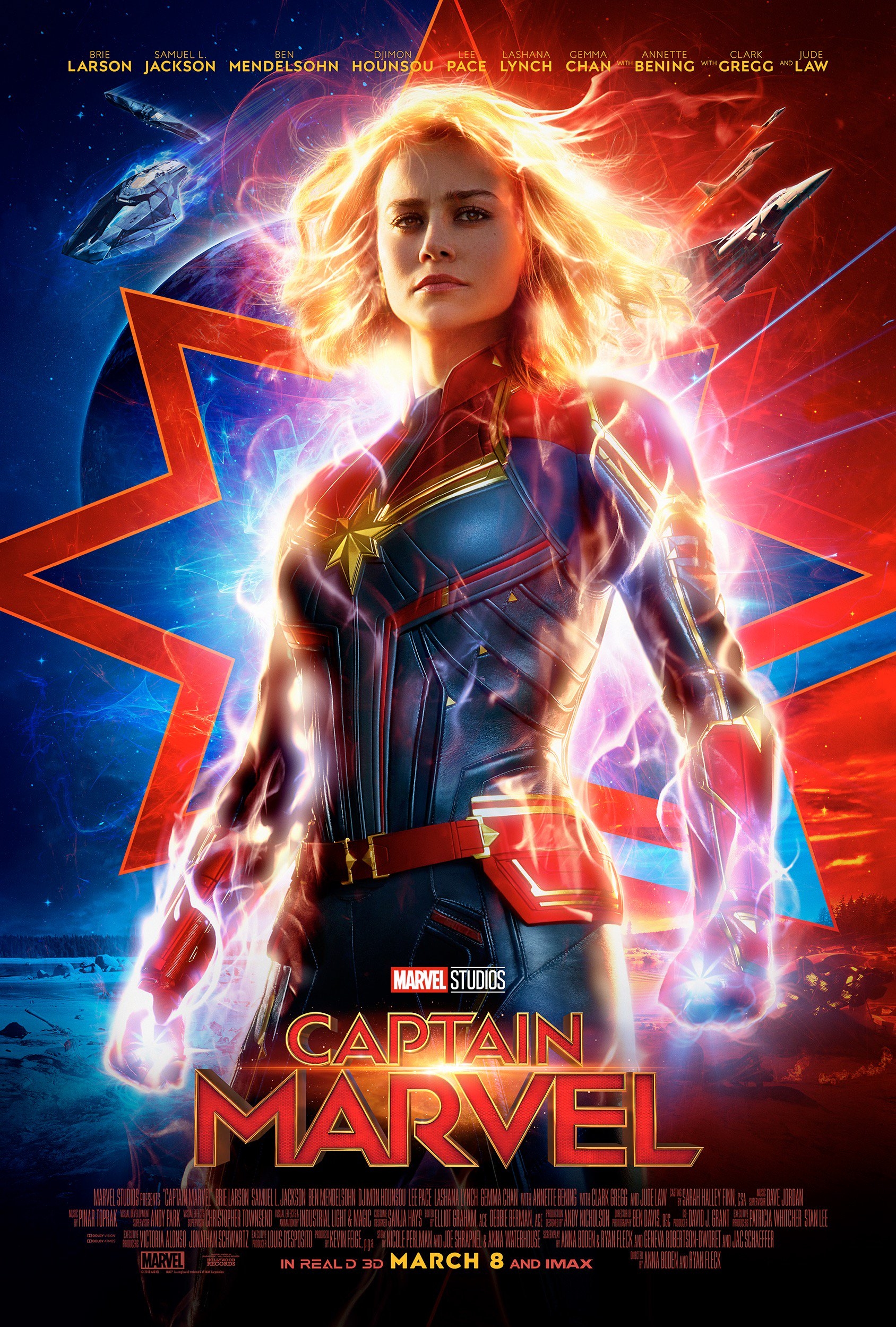
Let’s get this complaint out of the way directly: the use of female characters in J. J. Abrams’ second offering in the rebooted Star Trek franchise is sigh-worthy at best, probably more like eye-rolling and groan-worthy, and possibly even merits serious hair pulling. Zoe Saldana is still awesome as Uhura in Star Trek Into Darkness but her interesting updates, including linguistic genius and unwavering confidence, are undercut in this movie by her damsel-in-distress situations. Speaking of “damsels-in-distress,” Alice Eve’s Dr. Carol Marcus (presented on IMDB as simply “Carol”) represents yet another female character who’s good on paper and easy on the eyes but doesn’t offer much but a way to nix any *ahem* suggestions of sexual tension between Kirk (Chris Pine) and Spock (Zachary Quinto). Point, match, feminists.
That said, for all those who have been complaining that Abrams’ Star Trek isn’t “Star Trek” enough: you’re nuts! In this flick, perhaps even more than the first, Star Trek returns to its philosophical roots of exploring what it means to be human and how we strive to be the best iteration of that humanness. And yet, obviously, this is not your father’s Star Trek. It’s so filled with Easter eggs its villain is the biggest one of all (also: worst kept secret ever) while its loving nods to the preceding mythology temper any sense of snark or unending, frivolous “play.” Indeed, the film’s self-awareness of its changed universe is so meta, and yet so well-conceived in its own right, that it transcends post-modernism and becomes, what? Something that gets beyond that circling anxiety, frivolity, and/or simulacra of traditional post-modernism and into something that mingles our contemporary fears for the future (aka, obsessions with apocalypse), loves for nostalgia and technology, and twinging hopes that extraordinary individuals—particularly if they work in tandem—may be able to improve the world.

How Great is Gatsby? The Sarahs Respond

15 May

I love The Great Gatsby. It took several readings for me to appreciate its strange genius but now I’m hooked. It’s so rich and weird one can read it again and again and find a different perspective on the characters or an exquisitely beautiful passage. But it’s not a book that would seem to transfer well to film. But then again, nobody factored in Baz Luhrmann, who seemed a great choice to make an adaptation of Fitzgerald’s masterwork because you knew that’s what he would do—an adaptation—some heady filmic rendering of the novel, rather than an attempt to re-create the novel on screen. So how did Baz do? GLG’s Sarahs gathered their word-nerdery, film hats, and finest furs to find out.

***

Sarah S: I thought the movie was pretty interesting on both class and gender, albeit perhaps subtly enough that the average viewer might miss it. I also found any notion that it idealized that world sans critique completely stupid. I have more detailed thoughts but I’ll add them based on what you  think. What say you, Sarah T?

Sarah T: Yes I agree with you on both counts! On the gender front: People tend to hate Daisy because they think she’s just a blonde, glamorous, blank projection of men’s dreams. And she is a projection, but not just a projection. The problem isn’t that she has no personality, it’s that nobody sees Daisy–not Gatsby, not Tom, not even Nick, who prides himself on being observant. They’re all too busy being dazzled by that voice that sounds like money. (Good voice choice by Mulligan, by the way—low, musical, lilting, balmy as a summer day in Louisville.)

But as both Fitzgerald and this movie make clear, Daisy’s actually pretty complex. For one thing, she’s got this sly wit that she gets no credit for at all. (“Tom is getting very profound,” she says dryly after Tom goes on a ridiculous, racist rant. “He reads deep books with long words in them.”) And I loved that scene in the sweltering hotel room where we see how Daisy’s being ripped apart by two men who are each trying to control her, though Tom far more brutishly than Gatsby. I also like the image of the three-strand pearl necklaces that Tom gives to both Daisy and, later, to Myrtle–a handy symbol of the wealth and power that he uses to lure and trap women. That’s why Daisy tears them off when she tries to break off their engagement. Though it turns out that Gatsby is just as determined to use money to get to the girl of his dreams, too.

I also loved Jordan in this movie–so skeptical and breezy but with a new undercurrent of kindness that the book doesn’t give her. She came across as loyal to Daisy, compassionate toward Gatsby. And it’s clear how frustrated she is by Nick’s passivity, which is his greatest flaw, so good lookin’ out, Jordan.

Sarah S: There were a couple lovely scenes with Daisy when she realizes that Gatsby sees her as something to possess, a status symbol, just as Tom does. Gatsby might be nicer but that doesn’t change the essential fact. We see this when Daisy asks to go away and Gatsby insists they live out this public display of a fairytale. And then, as you mention, the room in the hotel when Daisy is literally repeating Gatsby’s words at his command (until she stops). (This scene is performed almost exactly as written in the novel.) The audience has this impression confirmed, too, when Gatsby watches Daisy prancing up his grand staircase and comments to Nick how glamorous she makes his house look. It’s almost as if she’s The Dude’s rug in that she “really ties the room together.” I found this a perfectly plausible way to represent Daisy based on the book and a nice way to push past Nick’s dismissal of her as vain and shallow. We still don’t have much access to Daisy but this twist, combined with Mulligan’s performance, gives us tantalizing glimpses, as if glimpsed through billowing curtains.

As to class, I felt that Luhrmann did an excellent job showing the crassness of Gatsby’s display of wealth, a poor boy’s excessive fantasy of how the wealthy live. When Tom taunts him that he’ll never belong, it’s true, and we know it’s true. When Nick tells Gatsby that “they’re a rotten crowd,” he’s right and, again, Gatsby will never belong with them. Depending on how you think about it, it’s a rather pathetic consolation prize, their rottenness. I also thought the film nailed the “valley of ashes” and the desperate, awful lives of Myrtle and George. No wonder Myrtle embraces an exciting affair with a rich brute (rich being the only part she’s not used to); no wonder George wants to sell that coupé and head west.

One other small thing that struck me was how often intimate conversations went on with servants still in the room–and how uncomfortable this made me, the grossness of ignoring the other humans in the room. In Downton Abbey and the like the family don’t have serious conversations in front of “the help.” So this detail seemed like a really subtle way to drive home the class distinction.

Continue reading 

I Cook/Blog, Therefore I Am

9 May

Sarah S.

When I was in college one of my favorite professors researched women’s cookbooks, particularly the ones created by churches, societies, and other clubs (as opposed to famous chefs such as Julia Child or giant publishing houses). This work was classic feminist recovery in the era of cultural studies, moving from highlighting forgotten women authors or figures and into celebratory analyses of women’s lives. If I recall, this professor focused on themes within the recipes (region, culture, etc.) and items such as decoration, fonts, purpose of the cookbook (usually some form of fundraising or cultural record).

Since that time, our cultural relationship to food has changed considerably. From celebrity chefs to locavore activists to foodies such as Michael Pollan and Mark Bittman, we have removed food production from the realm of Betty Draper and into…where exactly? If nothing else, our televisions, bookshelves, magazines, politics, and national conversations.

Another thing came to prominence during this time—the web. One thing it encouraged was a flurry of recipe sharing sites, in many ways not unlike the cookbooks my professor studied, and formal recipe sites such as Epicurious.com, similar to the fancy, all-encompassing cookbooks. But the internet also created something that I’m not sure really existed before, a merging of recipes and life narrative: cooking as autobiography.

These things of course start with blogs, whose journaling origins encourage a chatty, narrative-based genre. They also create a forum for home cooks to share their recipes, and this has often led to hybrids of autobiography and cook”books”. GLG’s own Chelsea has a blog in this vein. There are dozens (hundreds? thousands?) of others but two of my favorites are The Smitten Kitchen and The Sprouted Kitchen, both of which have brought their narrative-based recipes beyond the web and into beautiful books.

it's here!: the smitten kitchen cookbook

The creators of these blogs/books use stories to earn their stripes. They’re not trained chefs or restauranteurs (or writers or photographers) so they frame their recipes in experience: the funny or frustrating failures and missteps; the party for a friend that inspired this cake or that cocktail; the cultural or familial history that surrounds a dish.

But in so doing they also reveal how essential cooking and eating are to culture, and in such a beautiful way. On one hand, we cook because we have to eat (not eating not being a viable option for long). But for something so quotidian and necessary we surround it in an awful lot of creativity and ritual and love. It’s easy to forget that, to forget how essentially we need the production of food to sustain not only biological life but also social, familial, and individual life. By telling the tales of food, alongside sharing the how-tos of the food itself, these unique storytellers remind us.

“History Don’t Repeat Itself; It Rhymes” – Jay-Z and the Gatsby Soundtrack

8 May

Or yes, it is possible to have a PhD in American Literature, to have “actually read” Gatsby, and to be completely supportive of Jay-Z’s masterful new soundtrack.

Melissa Sexton

Note: NPR has taken down the livestream of the Gatsby soundtrack, since the soundtrack was released for purchase today.

I have spent the past two days in an ecstatic swoon, listening to the new soundtrack for The Great Gatsby over and over again. Haven’t heard it yet? NPR is streaming it on First Listen, giving the English majors of the world something to do with their media-time until the film FINALLY comes out this Friday. My love for the soundtrack is not surprising; when the first trailer came out last year, I was elated by its pairing of hip-hop and Prohibition-era glamor. I got that thrill – the one we go to the movies to get – when the trailer opened with shots of fast, glamorous cars careening to Jay-Z and Kanye’s menacing, pounding “No Church in the Wild.”

But not everyone has shared my enthusiasm. And as professional writers and passionate individuals alike began responding to the soundtrack and to early viewings of the film, I picked up on a pattern: to dismiss Luhrmann’s glossy, glittery remake and Jay-Z’s equally sequined soundtrack as somehow “inauthentic” to the original Gatsby – or, more subtly, as missing the novel’s entire point, reproducing the very American Dream that Gatsby was intended to critique (as we all dutifully learned in our high school English classes).

Now. I don’t do this very often. But. As someone with a PhD in American literature, I feel like I have some professional clout behind my own reflections on whether a hip-hop, cinematic orgy of a film can be considered “authentic” or “faithful” to an American modernist novel. And as someone with a developing love of contemporary popular music in general, and 21st century hip-hop in particular, I think I can talk about Jay-Z’s involvement in the project without the kinds of knee-jerk reactions I was noticing all over the comments sections of The New York Times and NPR – comments that were basically the equivalent of “You kids with your hip hop music! Get off my American literature! Now Maud, turn that NPR jazz hour back on!” But for once, I’m going to flaunt the professional clout. Because if I see one more Facebook post snidely asking if “anyone who liked the soundtrack had actually even read the whole book,” I am going to go all George Wilson on their asses. So. I’m not saying that Baz Luhrmann’s and Jay-Z’s take on Gatsby is THE right one, but I think it is A right one. And I want to explain why a trained literary professional can totally get behind this fusion of hip-hop with The Jazz Age.

Continue reading 

ABC’s “Scandal” and the Limits of Empathy

7 May

Sarah T.

Stories teach us empathy. When we get absorbed in the tale of a teenage vampire slayer or rival street gangs on the Upper West Side, we’re forced to step outside our comfort zones and consider the world from other people’s perspectives. I am absolutely down with that narrative project. I want to understand the different struggles we face, including the ones with our own demons. But lately I’ve found myself impatient with stories that ask audiences to channel their empathy toward violent men–to the exclusion of everyone else.

The character that’s tipped me over the edge is Huck on Scandal, the addictive-as-caramel-popcorn television drama by Grey’s Anatomy creator Shonda Rhimes. The show follows Washington DC power players and the band of brilliant outcasts, headed by Olivia Pope, who fix their problems.

Huck is probably the most fully-realized character in Pope’s hodgepodge troupe: a former soldier turned CIA assassin turned homeless man turned professional fixer. With his soft, stumbling voice, teddy-bear looks, and gentle manner, he’s one of Scandal‘s most easily sympathetic cast members. We understand the loneliness that drives him to set up camp outside a strange family’s house each day and watch them go through the ordinary motions of their lives, pizza dinners and game nights and walking the golden retriever. We cringe for him when he reveals that his old CIA nickname was “Spin,” short for spinster, “because they said I’d never find someone.”

The show loves to contrast Huck’s lost-soul mooniness with his brutal talents. In one excruciating scene last season, Pope asks him to torture a former CIA colleague for information. Huck agrees to give up his “sobriety” (the show frequently uses the language of addiction to discuss torture) for the greater good. Soon he’s leaning over an assassin named Charlie—someone who’s a lot like him, only meaner. Huck tells Charlie that he’s going to relish the high of making him suffer. “We both know what a junkie I can be,” he says.

Huck is our only point of identification in this scene. We don’t know Charlie very well at this point in the series, and what we do know, we don’t like. We’re not meant to care about his pain. The real source of dramatic tension is how Huck will be impacted by the torture. Now that he’s fallen off the wagon for Pope, will he be able to stop himself from spiraling into a new cycle of violence?

Continue reading 

Drawing Beauty: Limits and Surfaces in Dove’s Social Experiment

18 Apr

Chelsea H.

By now, you’ve probably seen that Dove “social experiment” that’s going around, but just in case you’re as behind as I am, here it is:

The premise here is simple and, if I’m honest, well-meaning: many women, as evidenced by the way they describe themselves, don’t recognize – or are reluctant to acknowledge – their own beauty.  Any flaws they have in appearance are magnified when they view themselves; every crease set by joy and laughter is a “crow’s foot.”  Every tiny, cinnamon-dust dot is a big ugly freckle.  Chins protrude invasively.  Cheeks that don’t have flesh-slicing angular edges are chubby.  These flaws are captured when they describe themselves, all unseen, to a trained forensic artist who draws their portraits to match their descriptions.  And really, this shouldn’t be terrifically surprising.  Women are hard on themselves.  We’ve been taught to be.  Lines, wrinkles, creases – these are harbingers of mortality.  Any freckle, any spot, even the hopefully named “beauty mark” is looked upon as a flaw.

But then the tables are turned: earlier on the day of the experiment, each woman met and chatted with another participant.  Each is asked to describe the other person, and again the sketch artist draws the face that is described.  Results are, as you might expect, startlingly different: faces described by their owners as fat are simply pleasantly oval in shape.  Chins that are claimed to protrude are “nice” and “thin.”  Noses are “short and cute.”  Each woman is then shown the two portraits: one “drawn” by her own eyes, one by the eyes of a stranger.

Most of the women stand in stunned silence.  Some tear up.  Some smile ruefully, and some seem – not ashamed – but a bit bashful at their own perception of themselves.  The one older participant, Florence, who is given a lot of face time, says “I should be more grateful of my natural beauty.  It impacts the choices in the friends that we make, the jobs we apply for, how we treat our children, it impacts everything.  It couldn’t be more critical to your happiness.”  The images of the women standing in an otherwise empty gallery gazing on the sketches send a powerful message, the tagline of the whole campaign: you are more beautiful than you think.

At first viewing, my impulse was that this video rocked.  I got a little teary.  I said some affirming things to myself.

But then I watched it again, and I started asking questions.  Yes, the message is good: women should celebrate their beauty, but what is really being said about beauty in this depiction?

As blogger Jazz has said perhaps more eloquently than I can, there is a disparity in the types of woman being represented here.  Most are white – and not just white, but blonde.  Most are young.  All are thin-to-average in weight and build.  The women of color who are shown are featured less – say less and receive less screen time – than their Caucasian counterparts.  The one Asian woman represented, as Jazz points out, says nothing at all.  Beauty is, then, a young, thin, white woman.

Bitch Magazine has also picked up this issue and paraphrases it perfectly: “The hearts of conventionally beautiful women can grow a little warmer today.”  And really, isn’t that what’s being shown here?  While Florence is a bit older than the other participants, she barely tips the scales at middle aged.  She talks about her wrinkles and crow’s feet, but she’s barely got any to worry about.  All the women featured have feminine hairstyles, all wear make-up, all are dressed in casually stylish but unremarkable ensembles.  Women should consider themselves beautiful, then, but the depiction of beauty we are told should be celebrated fits within a stiff, traditional mold.

Dove, I commend you for selling us a vision of much needed self-affirmation.  I commend you for acknowledging this tendency in women and encouraging a move away from it.  I commend you for resisting the urge to sell us your skin care in a promise to enhance the beauty we already having.  As Bitch notes, there is no product schilling in this ad, and that’s nice.  But this video does sell us something.  It sells us a standard: while telling us to celebrate ourselves – we are more beautiful than we think – it sells us what beauty means, and what we should do with it.

What beauty means here, beyond an image of a thin, fair-skinned, young woman, is a physical appearance.  There is no acknowledgment of personality.  There is no discussion of inner strength or kindness or courage or wisdom.  We see chins and cheeks and eyes and hair.  We see surface.  What is revealed about these women’s thoughts is appearance-based as well: each woman is made to think, and think deeply, but her thoughts are all – every one of them – about how she looks.  Everything is about the surface.

So beauty means what someone looks like on the outside.  And knowing our surfaces meet a standard makes us feel good which, as self-affirming messages go, is bad enough already: the right kind of beauty = happiness!  Let’s look again at Florence’s conclusions: “I should be more grateful of my natural beauty.  It impacts the choices in the friends that we make, the jobs we apply for, how we treat our children, it impacts everything.  It couldn’t be more critical to your happiness.”

Do I really want to live in a world where my physical appearance and how I interpret it impacts what choices I make when I seek friends?  Friends, I can tell you with certainty that neither my looks nor your looks were what drove me to desire your friendship.  Are my own looks really going to impact how I treat my children?  My wrinkles and laugh-lines, as they develop, will somehow influence the way I love?  Beauty as Dove defines it – how I look on the outside – is not, and should not, be what is most critical to my own happiness as a person.

But that’s not all.  In the final scene of the ad, one of the women’s voices tells us “We spend a lot of time, as women, analyzing and trying to fix the things that aren’t quite right, and we should spend more time appreciating the things we do like.” As she speaks, the scene changes from a reflective moment in the gallery of portraits to an outdoor setting.  Against a bright beam of sunlight, she is suddenly enfolded in the arms of – judging from what we can see of him – a young, conventionally attractive, well-dressed man.

So, it’s not just that women should celebrate their own beauty, it’s not just that the women in this video are what beauty looks like, but part of the message is also about heteronormativity.  That’s disappointing, even though it’s not strange.  But what really bothers me here is that even as we are told that women should stop worrying so much about how they perceive themselves and concentrate on more important things, we are told exactly what those more important things are.  The couple depicted here at the end of the video embrace each other, her hand grasps at the bottom of his jean jacket as they walk, and the video closes with this image of her tucked under his arm, almost disappearing against his body – providing a clear interpretation of what it is that we should “spend more time appreciating” and what it is that, at least in her case, “we do like.”

What we get here, then, is suggestive.  Beauty suddenly isn’t an idea in itself; we are shown what appreciating our own beauty does for us.  When we aren’t so worried about our fat cheeks and pokey chins and gross freckles, we can devote our time not to building our self-confidence or learning new things or celebrating our independence, but to hooking, hanging onto, and demurely all but fading into the protection and strength of a man.

Now that’s a message I want to send to my friends and my children…

Down the Rabbit Hole: Re-Reading Madeleine L’Engle

15 Apr

Sarah S.

The books we love tell a lot about us, particularly the ones read multiple times. And not because it shows you’re “old fashioned” or “feminist” but because if you can understand why a book gets to you so deeply that you’ll return to it again and again you’ll understand something about yourself. For example, it’s objectively true that Willa Cather’s The Professor’s House is a great book. But I read it for my connection with the titular professor, a character for whom I have empathy and criticism in equal measure. The fact that I read for the professor (and have little emotional interest in Tom Outland) reveals something about me—whether a truth of personality or a whisper of something I strive to understand.

I recently re-read one of my favorite childhood books, a novel that I read so many times its edges are grey and rumpled and the cover finally fell off. This time, however, I found it painfully wanting. Yet it also provided a telescope down the rabbit hole to my childhood self. I see why I liked it then and it has nothing to do with it being objectively good.

The book in question is Many Waters by Madeleine L’Engle, easily the least of the four novels about the Murray children (the others being A Wrinkle in Time, A Wind in the Door, and A Swiftly Tilting Planet). Many Waters focuses on the “normal” twins between the eldest daughter, Meg, and the youngest son, Charles Wallace. Sandy and Dennys Murray lack the genius as well as the awkwardness of their sibling but they nevertheless get their own adventure. In sum, they accidentally mess with one of their father’s space-time experiments and blast themselves to the time of Noah mere months before the flood that will destroy the known world.

The ancient world L’Engle creates is fascinating. All the people are small with the exception of the mysterious nephilim (fallen angels) and beatific seraphim (angels on earth), each of whom can transform from its beauteous, be-winged humanoid form to a unique animal host. Sandy and Dennys jointly fall in love with Noah’s youngest daughter, a beautiful, virtuous girl named Yalith who falls in love with both of them. Yalith, of course, is not part of the official story, nor is she meant to board the Ark that “El” has ordered Noah to build. What is this odd, religiousy threesome to do?

L’Engle’s solution has Yalith being taken into the “Presence” by one of the seraphim, just as her grandfather Enoch who walked with El and then was no more. Pretty it up with mysticism all one wants, Yalith essentially dies. The twins get home using a combination of seraphim and virtual unicorns and the rains come.

WP_20130304_001
I could not resist sharing the cover of my copy. Check out these 1980s-styled hotties.

As an adult, I see this as L’Engle’s most conservative novel. In her other Murray books she counters the anti-scientific streak in American Christianity (which has only grown more virulent since she wrote the books) while also insisting on an essential battle between darkness and light, evil and good in the universe. I would call the other three required reading for all Christian children and nearly-required reading for non-Christian children, particularly A Wrinkle in Time. (A claim I cannot make with a fully clear conscious for other series on both sides of the spectrum, on the one hand, Lewis’ Narnia Chronicles, on the other, Pullman’s His Dark Materials Trilogy.) Many Waters, however, puts L’Engle into ambiguous territory that she can’t write her way out of easily, particularly in a children’s book. It insists that El is good and highlights the virtue of Noah’s immediate family so it cannot or won’t account for the cruelty of wiping out everyone, including Yalith. It’s her least scientific novel, in part because it wants to vitalize a myth. And for a woman with a host of fantastic female characters under her belt, L’Engle peoples this book with women who are caricatures of virtue or vice.

So why did I love it so much as a child? Despite my current dislike, what insight did it bring me that merits this much thought? As a child I was sentimental, spiritual, and imaginative—always longing for transcendent experience. Yet I was also a mini-intellectual, enjoying to think about things, and somewhat inherently personally conservative, enjoying classic plots about princesses and love and Big Truths. (I’m still this way with my  imagination; it’s why I’m such a lousy fiction writer.) Many Waters brought to life a story I was raised to believe was historically true, it seemed intensely romantic to my child self, and yet it didn’t flinch from the hardness of a Big Truth (Big Truths, like virtual unicorns, tending to exist in various ways at the same time). It’s little wonder that this somewhat ridiculous novel touched a nerve in me and that I read it and read it and read it again.

Sometimes one re-reads a book, from childhood or otherwise, and discovers something even more magnificent than one remembers. Time and experience bring a new way of understanding the work and you find that it has grown richer. (This happened to me in another recent re-read, To Kill a Mockingbird, which I did not really “get” as a child but fell in love with on re-reading.) I think my days of re-reading Many Waters are now officially over. But I’m still glad I went inside its world one more time. Not because I enjoyed spending more time with the (let’s face it) terribly boring Sandy and Dennys but because I got to spend a bit of time with the child that used to be me.

In the Sky, Lord, in the Sky: Historical Guilt and Bioshock Infinite

4 Apr

brian psi

Irrational Games’ latest opus, Bioshock Infinite, was released last week, to universal acclaim. Creative director Ken Levine has been making the kind of upscale promotional rounds usually frequented by novelists or filmmakers—rare air for someone who has just made an ultraviolent first person shooter, the most reviled (and most lucrative) subgenre of the most debased popular art form. Like other games of its type, the new Bioshock features plenty of gunplay and gruesome melee finishers; unlike other games in any genre, Infinite’s storytelling, setting and themes explore the most troubling aspects of American history, providing a fairly scathing commentary on the interplay of American exceptionalism, racism, religion and labor exploitation. What really struck me is the way that the game evokes—in its narrative and mechanics—two very different responses to historical guilt, responses which make the game’s politics both fascinating and contemporary.

WARNING: massive spoilers below, including major plot twists and ending!

Continue reading 

Is Archer the Most Progressive Television Show On Women’s Sexuality?

3 Apr

Sarah S.

Note: This post contains adult-themed videos probably in the PG-13 range. Potentially NSFW and watch at your own risk/desire.

On the surface, a show about a sexist, moronic super-spy with zero self-reflection and serious mommy issues might not seem like a candidate for any kind of progressive title. But bear with me. Sure, ISIS agent Archer (voiced by H. Jon Benjamin) consistently makes racist, sexist, ageist, and homophobic comments (as do many others among the cast of characters). He’ll also blow his cover faster than you can say “martini” if he thinks being a “spy” will appeal to whichever woman (or women) he’s hitting on. The show is rife with Archer’s horror at any mention of his mother, Mallory Archer and ISIS head (Jessica Walter), having sex. And all the characters consistently grimace at the sexual exploits of overweight Pam (Amber Nash) and the strangulation fetish of Cheryl/Carol (Judy Greer).

Yet I still maintain that Archer may be the most progressive show on television regarding women’s sexuality.

Why?

th

Because despite the distaste expressed by the characters over their colleagues’ sexual predilections, the women in question ignore this kind of slut shaming and do what they want. Cheryl finds men (or machines) who can strangle her…just…right… Pam sleeps with, well, basically everybody; furthermore, her lovers unequivocally desire her OR only sleep with her when drunk but then keep coming back for more. And Mallory, a former super-spy herself, is still a stone fox who sleeps with everyone from the head of the KGB to Bert Reynolds.

Further, the animation frequently shows its characters in various states of undress or carefully concealed nudity. Mallory and Cheryl are represented as conventionally beautiful—even Mallory with her wrinkles. Archer’s counterpart and former fiancé, Lana (Aisha Taylor), is the most aggressively attractive of the female cast, with her long legs and giant breasts, and yet the show mocks her cartoonishly superhero figure with jokes about her “man hands.”

One’s reaction to nude Pam probably depends on one’s reaction to overweight women in general. Yet while the show gets laughs out of the characters’ comments about Pam’s weight (as well as her drinking, lack of sophistication, and lesbian tendencies), the animators don’t play Pam’s nudity for laughs. It just is, and a fairly accurate presentation as well. The situation might be funny, as well as the characters’ reactions to it (including reactions to Pam’s sexual activity and size), but her figure itself is not part of the joke.

Last, returning to Lana. She is one of the show’s most likable characters, one of the few who can give back Archer a piece of his own and who can actually get under his forever-adolescent emotional skin. They are the fated couple at the heart of the series. It’s also very refreshing to see an African American woman in such a prominent and powerful role. However, out of the female characters, Lana has the most standard role and the most standard sex life—infrequent, paved with jerks and losers, perpetually overshadowed by her ex (equally objectified by the animators, I might add). Thus, Archer further overturns expectations for women’s sexuality by offsetting the stereotypical aspects of Lana’s love-life against the unabashed antics of her lady-peers. Pretty impressive representin’ from a spy series merged with an office comedy.

What say you? Do you agree or disagree? Any other contenders for this title?

An Interview with Elizabeth Wein, Author of “Code Name Verity”

1 Apr

codenamecoverElizabeth Wein has had quite a year. Since her World War II-era spy novel Code Name Verity came out last spring, it’s racked up young adult book awards right and left, as well as accolades from publications like The New York Times and NPR.

All that acclaim couldn’t go to a more deserving book: Code Name Verity is a ferocious, dazzling tale of the friendship between two young women who also happen to be ace British spies, and the courage they summon under terrible circumstances. I stayed up late into the night finishing the book all in one gulp, and the next day, I started reading it over again. After that, I still wasn’t ready to let go of the world Wein had created, so I sat down and emailed Wein herself–who graciously agreed to an email interview with Girls Like Giants. Read on for her thoughts on villains, best friends, facing your fears, and what learning to fly a plane taught her about feminism. –Sarah Todd

‘Verity’ (aka Queenie) and Maddie are such distinctive, vivid characters. Were they inspired by particular people you’ve known or read about?

The things they do were inspired by real people—I read a lot about women of the Special Operations Executive and the Air Transport Auxiliary when I was doing the research for CNV, and I made altered use of some of their experiences. But the characters of Queenie and Maddie are totally original and developed as the book developed. They really aren’t like anyone I know—they are just themselves.

Often books about female friendships seem to focus on the jealousies and tensions between women. But Queenie and Maddie’s love for each other is pure–maybe because they become friends during wartime and establish that baseline level of trust from the get-go. Do you have a best friend? What’s your own perspective on female friendships been?

I have had several best friends at different points in my life, and there has occasionally been some jealousy involved (Queenie and Maddie do actually admit that they are sometimes secretly jealous of each other, and Maddie now and then expresses her irritation out loud to Queenie). But basically I *love* having a best friend—several different people have filled that role at different times in my life. Writing CNV was partly a celebration of that. When my closest friends live far away, as they do now, I really miss that easy and close-knit interaction.

Although I wouldn’t say the friendship in CNV is based on any ONE of my friends, the development of Queenie and Maddie’s friendship was consciously patterned on my friendship with Amanda Banks, who was enrolled in the same PhD program as me (CNV is dedicated to her). At the time we lived about 100 miles apart and only got to see each other every couple of weeks, and we really lived for those brief meetings. Also, we were under a lot of stress studying for our PhD exams and struggling with some academic backstabbing issues in our department—add to the mix a dorm fire at 2 a.m. and the two of us having to usher all the undergraduates out from the fifth floor—it wasn’t wartime, but our friendship developed very quickly sunder stress, a small bit of danger, and in spite of physical distance. So you can maybe see the parallels. Continue reading 

Follow

Get every new post delivered to your Inbox.

Join 109 other followers